Engineering Intelligence and Innovation (EII), Editorial Office
Template support: editor@eii-journal.org
|
Resource Type Access Formats Version Recommended For Reference Style DOI Copyright |
Abstract. This template provides a submission-ready structure for manuscripts sent to Engineering Intelligence and Innovation. It mirrors the same reading pattern used by published articles, so authors can check title formatting, frontmatter, abstract presentation, keywords, section hierarchy, equations, figures, tables, declarations, and reference style in one place. Use it to shape the final paper, keep notation and captions consistent, and confirm that the manuscript reads clearly both on screen and in downloadable formats. |
Keywords: manuscript template; article structure; engineering intelligence; formatting guidance; figures; references
Template Highlights
- Follows the same reader layout and section rhythm as published EII articles.
- Includes examples for equations, algorithms, figures, tables, declarations, and references.
- Provides both online guidance and downloadable source files for offline preparation.
1. Introduction
Engineering Intelligence and Innovation (EII) publishes work that connects intelligent methods with real engineering systems, workflows, and decisions. In the introduction, explain the practical problem, why it matters, which limitation remains unsolved, and what your manuscript contributes to engineering knowledge or deployment.
Write with the final reader in mind. The strongest introductions move quickly from context to gap, then to the paper's contribution and validation strategy. A short contribution summary is encouraged, especially for multidisciplinary submissions that combine modeling, optimization, control, simulation, digital twins, or AI-enabled engineering analysis.
Recommended contribution bullets cover three points: what you propose, how you validate it, and what impact it enables in practice.
2. Related Work
Summarize the most relevant literature and position your work against it. Focus on the engineering gap your method fills and explain why existing approaches remain insufficient under the practical constraints that matter for the target system, such as safety, cost, latency, robustness, interpretability, deployment burden, or data availability.
3. Method
3.1. Problem Formulation
Define variables, assumptions, constraints, and objectives clearly. Keep notation consistent across equations, figures, and tables. If the work uses learning-based methods, specify the architecture, training setup, loss terms, hyperparameter choices when material, and evaluation protocol.
3.1.1. Abbreviations and Acronyms
Define abbreviations and acronyms the first time they appear in the text, even if they already appear in the abstract. Avoid abbreviations in the title unless they are standard and unavoidable. Keep terminology stable across sections so the manuscript reads like one coherent narrative.
3.1.2. Equations
Number equations consecutively with the number aligned to the right, as in (1). Use the equation editor for display equations, define every symbol before or immediately after first use, and punctuate equations when they are part of a sentence.
\[ B_{p} + H_{2} = 40. \]
When referring to an equation in running text, use the concise form "(1)" except at the beginning of a sentence, where "Equation (1)" is preferred.
3.1.3. Algorithms
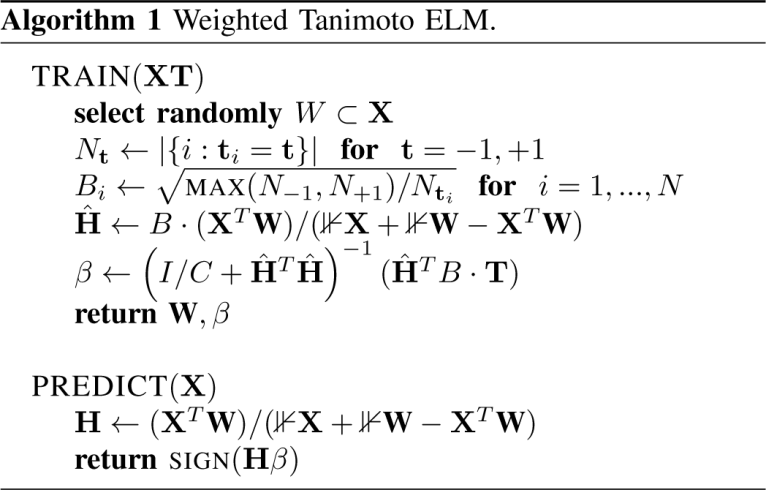
Algorithms should be numbered and paired with a short, descriptive title. Keep pseudo-code compact, ensure variable names are consistent with the surrounding text, and explain any initialization or stopping rules that would affect reproducibility.
3.2. Implementation Details and Reproducibility
Describe the implementation at the level needed for another researcher or engineer to understand the pipeline and repeat the experiment. Include software or hardware details when they change the interpretation of results, and specify how readers can access data, code, or other supporting materials.
3.2.1. Multipart Figures
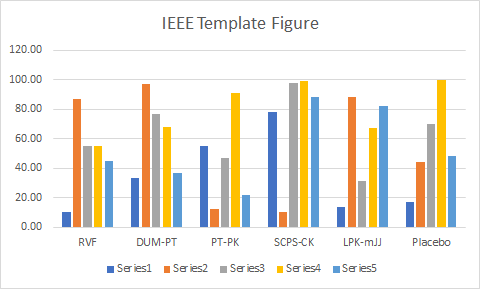
Multipart figures should read as one coherent visual argument. Keep panel ordering obvious, use consistent scales and typography, and explain what each panel contributes to the engineering interpretation.
3.2.2. File Formats for Graphics
Accepted graphics formats include EPS, PDF, TIFF, JPEG, and PNG. When source graphics originate from Word, PowerPoint, or Excel, PDF export is often the safest option for preserving fonts, line weights, and annotation placement across platforms.
3.2.3. Sizing of Graphics
Choose figure dimensions that remain legible at publication size. Most charts, graphs, and tables should be designed either for a single-column footprint or for a wider page-level placement when the comparison demands more space.
3.2.4. Resolution
Author photographs, grayscale images, and color figures should generally be at least 300 dpi. Line art and tables should generally be at least 600 dpi so borders, labels, and fine details remain readable in export and print workflows.
3.2.5. Vector Art
Vector formats such as EPS, PDF, and PS are preferred when possible because they preserve sharp lines and text. Embed fonts or convert text to outlines before final export to avoid missing glyphs or reflow across systems.
3.2.6. Color Space
Use RGB or CMYK for color graphics depending on production needs, grayscale for grayscale images, and bitmap or grayscale space for line art when required. Keep contrast high enough that key distinctions survive both screen viewing and print output.
3.2.7. Accepted Fonts Within Figures
Use clean, broadly available typefaces within figures, such as Times New Roman, Helvetica, Arial, Cambria, or Symbol. Consistent in-figure typography improves readability and makes composite layouts feel intentional rather than stitched together.
4. Results and Discussion
Report results with clear metrics, comparisons, and operational interpretation. Include ablations, sensitivity analyses, and any failure cases that meaningfully affect the engineering conclusion. The discussion should explain not only whether the method works, but also how robustly it works and under what constraints.
| Table Head | Table Column Head | Table Column Head |
|---|---|---|
| Table row head | Table column subhead | Subhead |
| Table row head | Data | Data |
| Table row head | Data | Data |
| Table row head | Data | Data |
5. Conclusion
Close with the main findings, the practical implication for engineering systems, and any key limitation or next step. Avoid repeating the abstract verbatim. The conclusion should leave the reader with a clear sense of what changed because of the work.
Acknowledgment
Use the singular heading "Acknowledgment." Mention sponsor or institutional support clearly and avoid informal phrasing. When relevant, follow the funding or institutional wording required by the sponsoring organization.
Declarations
Funding: State funding sources or write "No external funding."
Conflict of Interest: Declare conflicts or write "The authors declare no competing interests."
Data and Code Availability: Provide a repository link or access statement. If materials are restricted, explain the access conditions clearly.
Ethics Approval: For human or animal studies, provide approval details and review-board information when applicable.
AI Tool Disclosure: If generative AI tools were used, disclose their scope and confirm that the authors remain responsible for accuracy, originality, and compliance.
References
Use the examples below as formatting guidance when preparing the final reference list.
- J. K. Author, "Name of paper," Abbrev. Title of Periodical, vol. x, no. x, pp. xxx-xxx, Abbrev. Month, year, doi: 10.1109.XXX.1234567.
- J. K. Author, "Name of paper," Abbrev. Title of Periodical, vol. x, no. x, Abbrev. Month, year, Art. no. xxxxx, doi: 10.1109.XXX.1234567.
- J. U. Duncombe, "Infrared navigation-Part I: An assessment of feasibility," IEEE Trans. Electron Devices, vol. ED-11, no. 1, pp. 34-39, Jan. 1959, doi: 10.1109/TED.2016.2628402.
- E. P. Wigner, "Theory of traveling-wave optical laser," Phys. Rev., vol. 134, pp. A635-A646, Dec. 1965.
- P. Kopyt et al., "Electric properties of graphene-based conductive layers from DC up to terahertz range," IEEE THz Sci. Technol., to be published, doi: 10.1109/TTHZ.2016.2544142.
- R. Fardel, M. Nagel, F. Nuesch, T. Lippert, and A. Wokaun, "Fabrication of organic light emitting diode pixels by laser-assisted forward transfer," Appl. Phys. Lett., vol. 91, no. 6, Aug. 2007, Art. no. 061103.
- D. Comite and N. Pierdicca, "Decorrelation of the near-specular land scattering in bistatic radar systems," IEEE Trans. Geosci. Remote Sens., early access, doi: 10.1109/TGRS.2021.3072864.
- H. V. Habi and H. Messer, "Recurrent neural network for rain estimation using commercial microwave links," IEEE Trans. Geosci. Remote Sens., vol. 59, no. 5, pp. 3672-3681, May 2021. [Online]. Available: https://ieeexplore.ieee.org/document/9153027
- G. O. Young, "Synthetic structure of industrial plastics," in Plastics, 2nd ed., vol. 3, J. Peters, Ed. New York, NY, USA: McGraw-Hill, 1964, pp. 15-64.
- W.-K. Chen, Linear Networks and Systems. Belmont, CA, USA: Wadsworth, 1993, pp. 123-135.
- Transmission Systems for Communications, 3rd ed., Western Electric Co., Winston-Salem, NC, USA, 1985, pp. 44-60.
- R. J. Hijmans and J. van Etten, "Raster: Geographic analysis and modeling with raster data," R package version 2.0-12, Jan. 12, 2012. [Online]. Available: http://CRAN.R-project.org/package=raster
- E. E. Reber, R. L. Michell, and C. J. Carter, "Oxygen absorption in the earth's atmosphere," Aerospace Corp., Los Angeles, CA, USA, Tech. Rep. TR-0200 (4230-46)-3, Nov. 1988.
- D. B. Payne and J. R. Stern, "Wavelength-switched passively coupled single-mode optical network," in Proc. IOOC-ECOC, Boston, MA, USA, 1985, pp. 585-590.
- D. Ebehard and E. Voges, "Digital single sideband detection for interferometric sensors," presented at the 2nd Int. Conf. Optical Fiber Sensors, Stuttgart, Germany, Jan. 2-5, 1984.