Engineering Training Center of the School of Mechanical and Aerospace Engineering, Jilin University, Changchun, China
Corresponding author: wangyunyi@jlu.edu.cn
|
Article Type Access License Published Online Copyright |
Abstract. Under the background of "five aspects of education in parallel", integrating aesthetic education into engineering training is crucial for cultivating all-round engineering innovation talents. The engineering training center, as the core carrier of practical teaching, provides natural support for the implementation of aesthetic education. This article takes the aesthetic education teaching in university engineering training centers as the research object, explains its core connotation and educational value, analyzes the current predicaments, and combines the practical experience of Jilin University's engineering training center to explore feasible paths from five aspects: concept innovation, curriculum reconfiguration, faculty building, evaluation optimization, and atmosphere creation. The research shows that focusing on engineering practice to explore aesthetic elements and constructing a collaborative closed-loop aesthetic education system is the key to enhancing the humanistic literacy and innovation ability of engineering talents, and can provide reference for related teaching reforms in universities. |
Keywords: Engineering training; aesthetic education teaching; practical approach; integrated development of all aspects of education; engineering literacy
Suggested citation: Wang, Y., Zhou, L., & Liu, P. (2026). Exploration of practical paths for implementing aesthetic education in the engineering training center. Engineering Intelligence and Innovation, 1(1).
Key Takeaways
- Embed aesthetic education across engineering training to balance skills and humanistic literacy.
- Curriculum, faculty, and evaluation reforms must move together.
- Practical projects carry rich aesthetic elements—surface them deliberately.
1. Introduction
With the implementation of policies such as "Opinions on Comprehensively Strengthening and Improving School Aesthetic Education in the New Era", integrating aesthetic education into all aspects of education has become an important requirement of the "Five Education Promoting" strategy. Engineering talents should possess both professional skills and aesthetic qualities[1]. The various practical training programs offered by the Engineering Training Center contain abundant aesthetic elements, and they represent a crucial scenario for integrating aesthetic education with engineering education. However, at present, engineering training in universities often focuses too much on skills while neglecting qualities. Aesthetic education is marginalized and formalized, making it difficult to meet the needs of cultivating interdisciplinary talents. This research aims to fill the existing gaps and holds significant practical and theoretical value[2,3].
The research on engineering aesthetics in foreign countries began earlier. The "dual system" in Germany and the Bauhaus school laid the foundation for the integration of art and technology[4]. The United States promoted the transformation of STEM to STEAM[5]. Domestic research has warmed up in recent years, focusing on the value and path of engineering aesthetics education[6]. However, most of it remains at the conceptual level or is based on a single perspective. This article innovatively focuses on the engineering training center, constructing a deep integration path of "engineering practice + aesthetic cultivation", designing layered and categorized integration plans and a diversified evaluation system, which is practical and has promotion value.
2. The Core Value of Aesthetic Education
2.1. Educational Forms of Aesthetic Education in Engineering Training
Different from traditional art-based aesthetic education, this specifically refers to the situation in engineering training scenarios where the core objective is to cultivate students' engineering aesthetic literacy. By relying on various practical projects, it explores the beauty of science, craftsmanship, innovation, humanities, and labor. Through the approach of "learning by doing and perceiving beauty within it", it guides students to perceive, appreciate, and create beauty, achieving a coordinated improvement of professional skills and aesthetic literacy. The core lies in the deep integration of aesthetic education and engineering practice, running through the entire process of training[7].
2.2. Educational Value of Aesthetic Education in Engineering Training
Facilitating the all-round development of talents and enhancing core competitiveness: Addressing the deficiency in the humanities education in engineering, promoting the transformation of students from "technical artisans" to "comprehensive innovative talents", optimizing design and craftsmanship from an aesthetic perspective, and enhancing their employment and career development potential[8].
Activate innovative thinking and empower practical innovation: Through aesthetic education, stimulate imagination and creativity, encourage students to break free from conventional thinking patterns, explore better technical solutions and design concepts, and generate results that are both creative and practical.
Cultivate humanistic sentiments and shape engineering ethics: Incorporate the virtues of responsibility and excellence into the curriculum, fostering students' rigorous attitude, establishing the concepts of green and responsible engineering, and shaping engineering professionals who are warm-hearted and responsible[9,10].
3. The Practical Approach of Conducting Aesthetic Education
3.1. Problem of Aesthetic Education Teaching
The art education teaching in the engineering training center is facing multiple intertwined problems: Firstly, there is a cognitive bias, with the focus on skill training, resulting in insufficient attention to art education and superficial integration; Secondly, the teaching staff is weak, with most of the training teachers having an engineering background and lacking systematic art education training and interdisciplinary collaboration; Thirdly, there is a lack of courses, with art education not being included in the curriculum design, and the exploration of aesthetic elements is not deep enough; Fourthly, the evaluation is monotonous, with an emphasis on operational norms and the accuracy of results, without considering aesthetics and creativity, making it difficult to quantify the effectiveness.
3.2. The Practical Approach of Aesthetic Education Teaching, Taking the Engineering Training Center of Jilin University as an Example
3.2.1. Conceptual Innovation
The Engineering Training Center of Jilin University has broken through the barriers of disciplines and established the core concept of "integrating aesthetic education". It clearly recognizes that aesthetic education is an important part of engineering talent cultivation. It places the aesthetic education goals on the same level as the skill training goals and integrates them throughout the entire process of practical training. Through special discussions, policy explanations, and case sharing, it changes the cognition of teachers and students, discarding the incorrect notion that "aesthetic education has nothing to do with engineering". It forms a consensus of "skill transmission + aesthetic cultivation" for collaborative education. At the same time, it strengthens top-level design and overall coordination.
3.2.2. Course Reengineering
The Engineering Training Center of Jilin University has, within the existing engineering practice courses, thoroughly explored aesthetic elements and established a complete curriculum-based aesthetic education system.
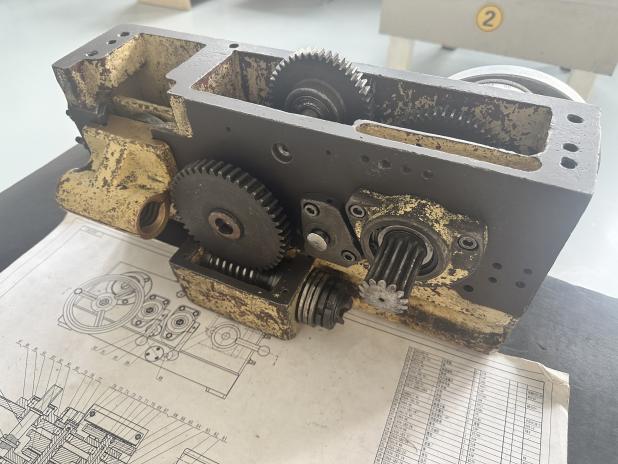
Firstly, focus on the beauty of science and nature. Engineering practice stems from the exploration and application of natural laws. Students acquire basic knowledge such as mechanical structures and geometric forms through practice, and appreciate the scientific beauty within. For example, in the mechanical disassembly and assembly course, students learn about the structure and motion principles of the slide box, experiencing the integration of rational calculation and technological beauty, and understanding the essence of "science is also art", as shown in Figure 1; In the comprehensive training courses, the center guides students to create based on the ecological environment, experiencing the harmony between engineering design and nature, as well as the ecological aesthetics of "harmonious coexistence between humans and nature", as shown in Figure 2.
Secondly, the course focuses on cultivating the beauty of technology and craftsmanship. Engineering technology not only aims to achieve functionality but also emphasizes the refinement and innovation of the process. Practical teaching enables students to understand the entire process of mechanical manufacturing. The machining center course compares the differences between traditional and CNC machine tool processing, allowing students to experience the tactile quality of the finished products. In the metalworking course, students manually polish parts, experiencing the extreme pursuit of "craftsmanship spirit" for details, as shown in Figure 3. Through various guidance methods, students internalize the "precise, regular, and efficient" process requirements as an aesthetic pursuit.

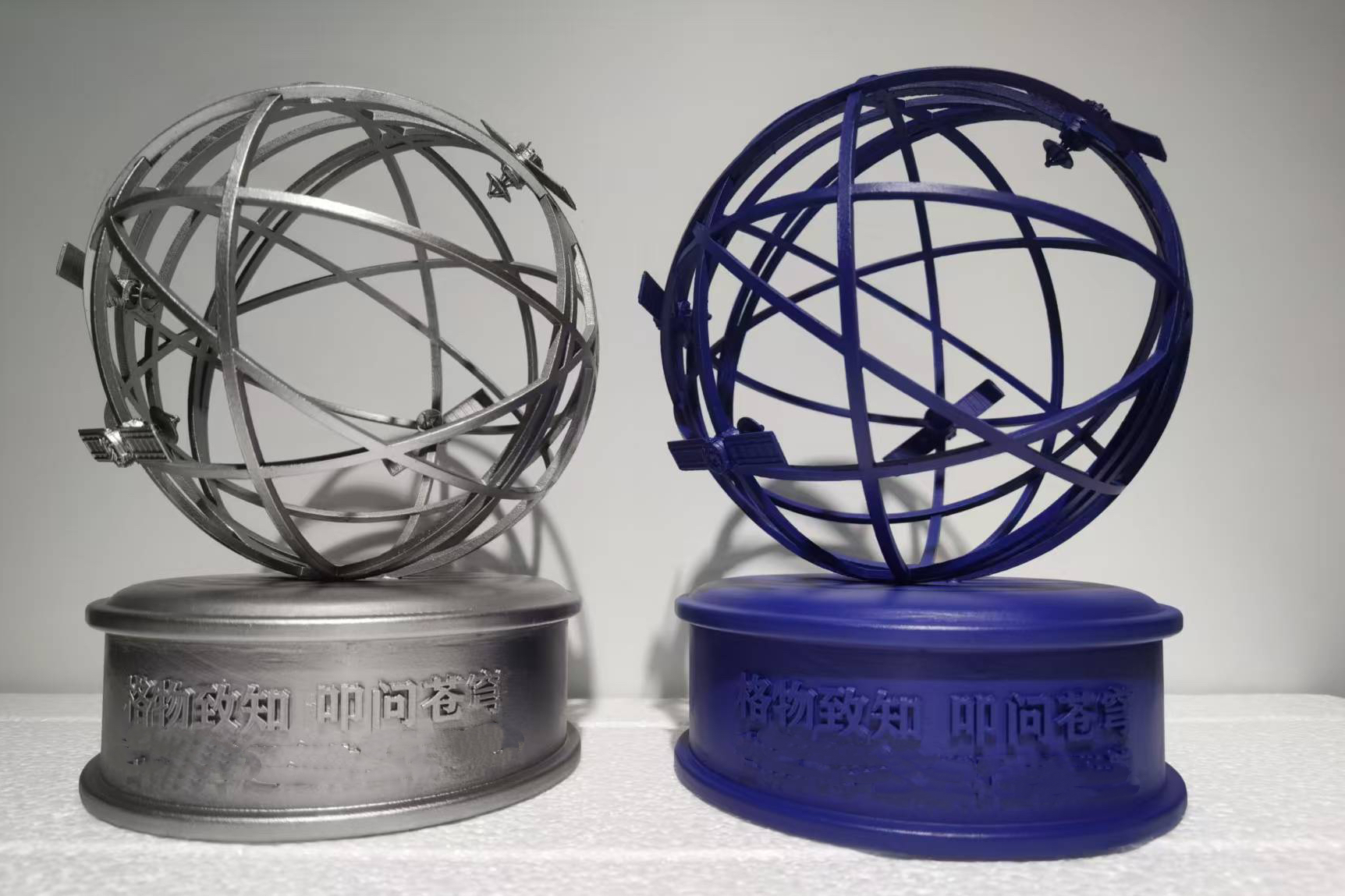
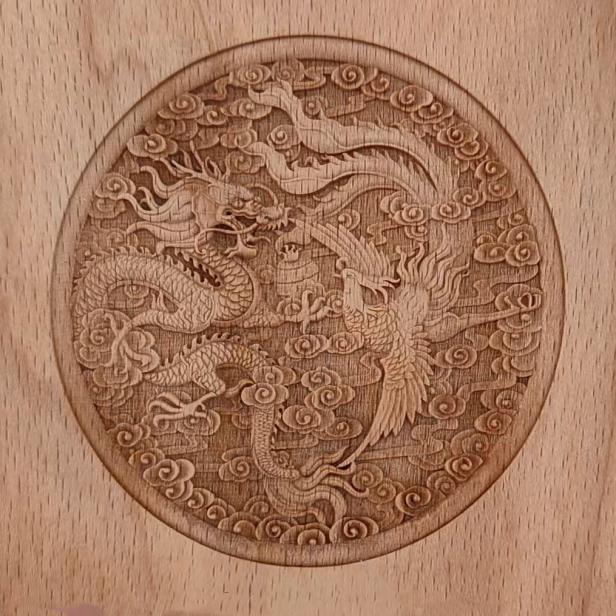
At the same time, the center advocates the integration of innovation and practical beauty, and engineering innovation embodies the beauty of breakthrough and creation. The center encourages students to break through disciplinary barriers and integrate artistic elements into engineering design, cultivating a "technology + art" cross-disciplinary thinking. Courses such as laser processing, precision casting, and 3D printing have all achieved the combination of technology and art, creating works that are both functional and aesthetically pleasing, as shown in Figure 4,5 and 6.

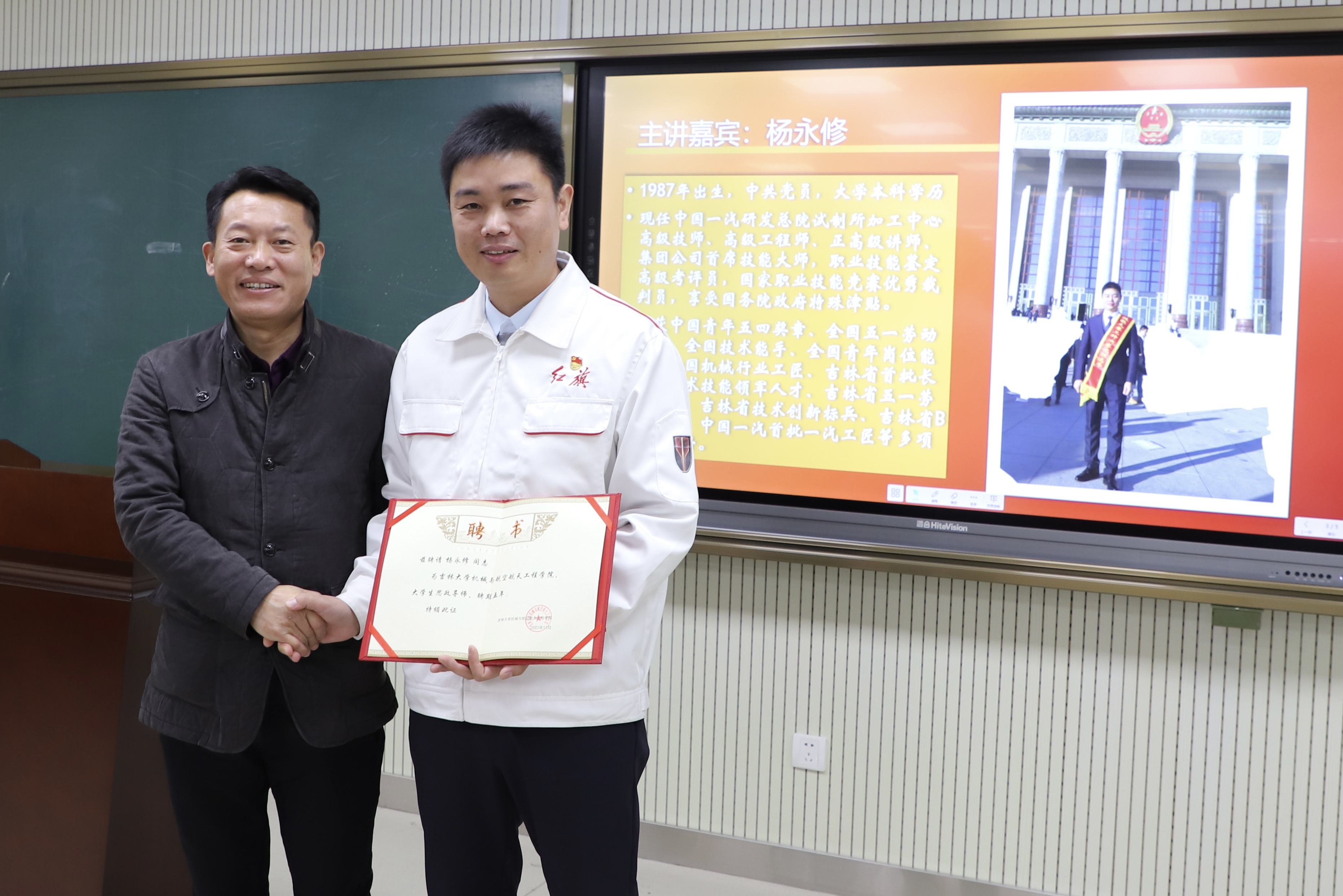
Finally, the beauty of labor and dedication is an important component of engineering practice aesthetic education, embedded in perseverance, determination, and responsibility. The center conducts the ideological and political session of "National Craftsmen in the Classroom", as shown in Figure 7, allowing students to listen to the growth stories of craftsmen, experiencing the hardships of engineering practice, feeling the efforts of laborers in transforming designs into reality, and highlighting the beauty of labor and dedication.
3.2.3. Teacher Development
To enhance the aesthetic education capabilities of teachers, the Engineering Training Center of Jilin University regularly organizes engineering training teachers to participate in specialized training courses on aesthetic education theory, engineering aesthetics, and aesthetic education teaching methods. Experts from the School of Arts are invited to conduct special lectures and practical guidance, systematically improving the teachers' aesthetic education theoretical literacy and teaching abilities. Teachers are encouraged to pursue interdisciplinary studies and learn related knowledge such as industrial design and art appreciation, broadening their aesthetic education teaching horizons. At the same time, a collaborative teaching mechanism between the Engineering Training Center and the School of Arts has been established. Art teachers are invited to participate in the aesthetic education components of engineering training courses, guiding students in aesthetic design and appreciation, and creating a composite aesthetic education teaching team. Regular on-campus and off-campus teaching and research exchanges are organized to share excellent aesthetic education teaching cases and experiences, promoting the iterative upgrade of teachers' aesthetic education teaching abilities and the practical transformation of teaching research achievements.
3.2.4 Evaluation Optimization
To ensure the effectiveness of aesthetic education, the center has improved and established a diversified evaluation index system. That is, it breaks away from the single skill evaluation orientation and constructs a four-in-one diversified evaluation index system of "skill attainment + aesthetic literacy + innovation and creativity + ethical responsibility". Quantitative indicators cover the accuracy of practical training results and the degree of process standardization, etc.; qualitative indicators include aesthetic perception ability, design creativity level, and implementation of engineering ethics, etc., comprehensively and objectively assessing the comprehensive literacy performance of students.
3.2.5. Creating the Atmosphere
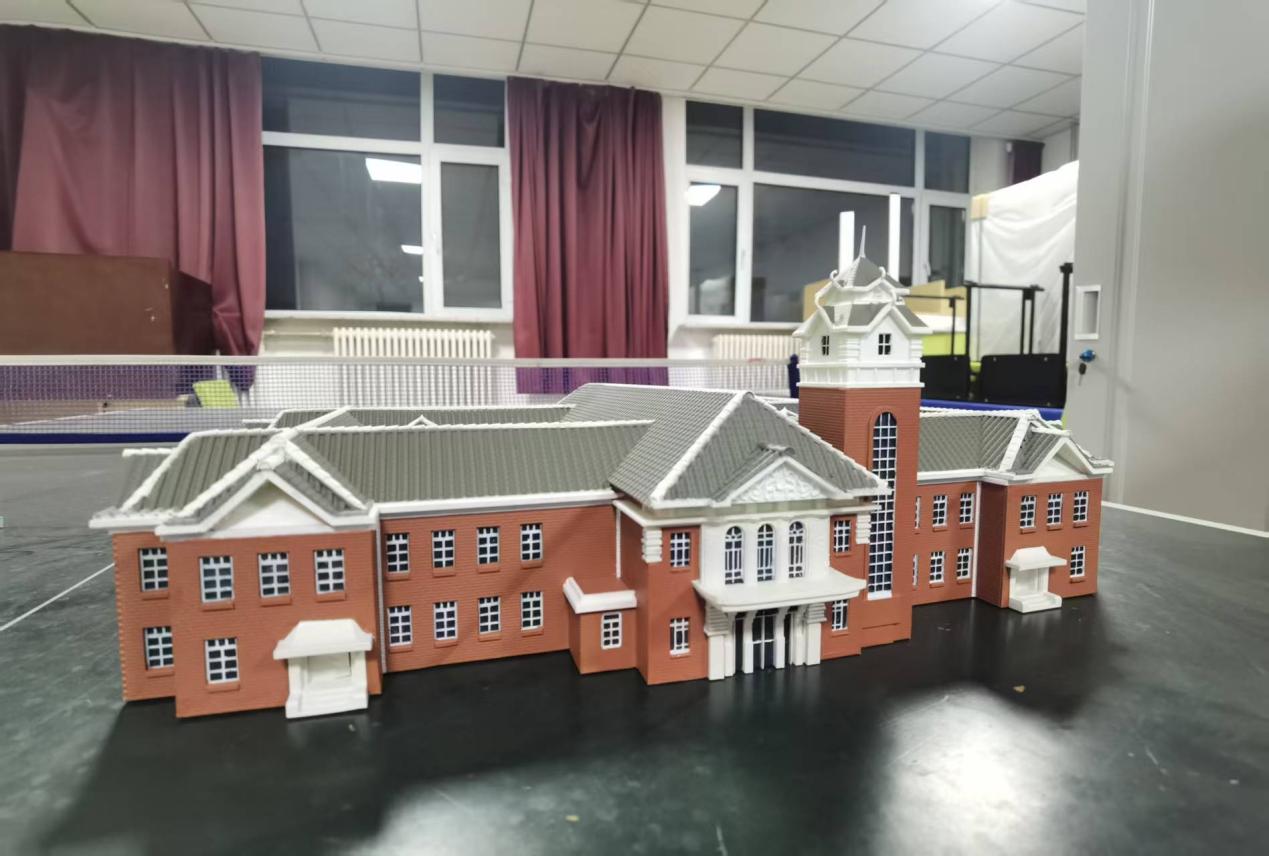
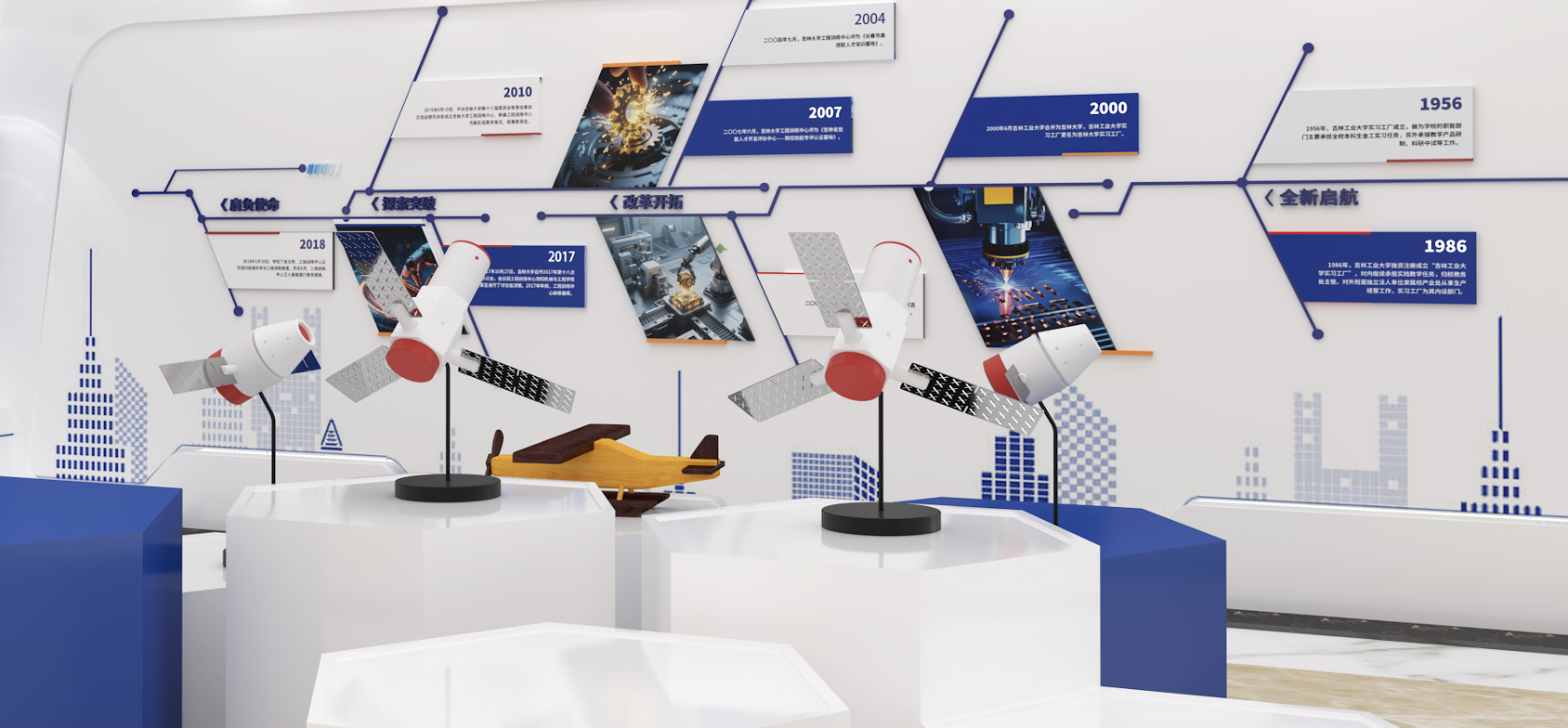
The center focuses on cultural construction and creates an aesthetic training environment in the engineering training center. In the classrooms, exhibition halls, and corridors of the center, outstanding engineering works, posters on craftsmanship aesthetics, the innovative stories and aesthetic concepts of famous engineers are arranged to create a profound atmosphere of engineering aesthetic education. The training equipment and layout are optimized to achieve the unity of functional practicality and visual comfort, allowing students to be gradually influenced and nourished by engineering aesthetic education,as shown in Figure 8.
At the same time, special aesthetic education activities are carried out: regular exhibitions of engineering aesthetic works, lectures on craftsmanship aesthetics, and innovation design competitions are held to provide students with a platform to showcase their aesthetic achievements and exchange learning experiences, broadening their aesthetic horizons and cognitive boundaries.
4. Results and Achievements
The implementation effectiveness of aesthetic education mainly manifests in three aspects: student cultivation, teaching implementation, and the achievement of educational goals.
At the student cultivation level, through various engineering practice courses such as mechanical disassembly and assembly, laser processing, and metalworking, students can truly experience the multi-dimensional aesthetic connotations of science and nature, technology and craftsmanship. This not only deepens their understanding of "science as art", enables them to perceive the core of "craftsmanship spirit", but also cultivates their cross-disciplinary thinking of "technology + art", local cultural identity, and establishes a correct engineering ethics concept. It achieves the simultaneous improvement of engineering skills and aesthetic literacy.
At the teaching implementation level, a multi-dimensional and complete aesthetic education system has been successfully constructed, integrating aesthetic elements deeply into the entire process of practical training, forming a teachable and promotable teaching model.
At the educational goal level, it effectively connects the "five educations in parallel" educational policy, effectively plays the supporting role of aesthetic education in the cultivation of multi-disciplinary engineering talents, and lays a foundation for the enhancement of the core competitiveness of talents.
5. Conclusion and Outlook
This article summarizes the achievements of the aesthetic education construction of the Engineering Training Center of Jilin University: It clarifies that engineering training aesthetic education is an important path and core value for implementing the "five educations in parallel" and cultivating comprehensive engineering talents. It also sorts out the current challenges faced by engineering aesthetic education in terms of cognition and teachers. It extracts the practical experience of the center in constructing an all-round engineering aesthetic education system through five paths, and verifies the effectiveness of deeply exploring the aesthetic elements in training. In the future, it is necessary to explore the deep integration of aesthetic education with related education, establish a long-term mechanism, and provide support for engineering talent cultivation.
References
- Feng Huijuan, Zhang Yanrui, Liu Xiaohui, et al. Exploration of Integrating Aesthetic Education into Engineering Training Pathways in Universities [J]. Laboratory Science, 2025, 28(5): 134-138.
- Zhu Zeyu, Ren Li. Research on the Practice Pathways of Aesthetic Education for College Students in Science and Technology Universities [J]. Education Theory and Practice, 2024, 44(33): 14-17.
- Li Zhongguo, Yao Hong. Research on the Value Implications and Practical Paths of Integrating Aesthetic Education into College Ideological and Political Courses [J]. Jilin Education, 2024(23): 32-34.
- Bayer B H, Gropius W, Gropius I. Bauhaus, 1919-1928 [M]. Museum of Modern Art, 1938.
- Innella G, Rodgers P A. The Benefits of a Convergence between Art and Engineering [J]. Ital Publication, 2021(1). DOI:10.28991/HIJ-2021-02-01-04.
- Liu Renjie, Lu Jingzhou, Sun Aifu. Exploration and Practice of Teaching Reform of Civil Engineering Courses Integrated with Aesthetic Education [J]. University: Teaching and Education, 2022(10): 173-176.
- Feng Huijuan, Zhang Yanrui, Mu Fanglin, et al. Exploration and Practice of Collaboration between Schools and Enterprises, Cultivating Virtue through Beauty in Engineering Training [J]. Industry and Science & Technology Forum, 2025(17).
- Liu Hui, Shen Xiaorong, Shen Qian. Exploration and Practice of the Aesthetic Education System in Engineering Universities Based on Stimulating the Potential for Innovation - Taking University of Electronic Science and Technology of China as an Example [J]. Higher Engineering Education Research, 2022, 70(4): 110-115.
- Zhang Jiangquan, He Jian. Exploration and Practice of Ideological and Political Education Path for Engineering Training Courses in Universities under the Context of Three-Dimensional Goal Orientation [J]. Education Progress, 2025, 15(8): 654-661.
- Ma Haibo, Liang Yande. Innovating Education and Integrating Knowledge and Action - Exploring and Practicing the Engineering Training Teaching Model [J]. China Modern Educational Equipment, 2013, 000(005): 88-89.